Category Archives: Family

Maynooth

All in all William John Burke spent five years at Maynooth, from his entry in 1825 to his ordination as a deacon in 1830. He was a studious pupil and did well in his exams. On the surface it appear that his time there was given to study and the spiritual journey towards priesthood. That was the case but there was other undercurrents beneath the surface too.

Maynooth College

Maynooth College

In the five years William John Burke spent at St Patrick’s Maynooth there was a lot of political change, and social unrest in Ireland. The campaign for Catholic Emancipation took place between 1823 till 1829, when it was finally achieved.

St Patrick's

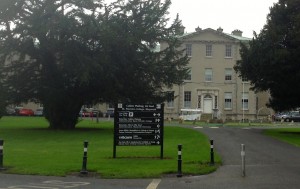
St Patrick’s today


Training

When William John Burke entered the seminary at Maynooth in 1825 he was dedicated to his vocation. He studied hard and subsequently did well in his exams. He had no ambitions other than that of becoming a priest. He may have given main priorities to his studies, but he could not ignore the political events that were unfolding in the world outside, events that would have an impact on him directly.

While William John Burke was attending St Patrick’s of Maynooth from 1825-30 the one of the biggest political issues of the first thirty years of the nineteenth century –  ‘The Catholic question’, was drawing to a conclusion.  At the time Catholics were excluded from high ranking positions, in government.

Catholic Emancipation was finally granted by the Roman Catholic Relief Act of 13 April 1829 (10 Geo. IV, c. 7). It provided a new oath of allegiance, enabling Catholics to enter Parliament. Catholics were allowed to belong to any corporation and to hold certain positions that they were previously barred from, namely, many high-ranking Governmental, administrative and judicial offices. The Act applied to the whole of the United Kingdom.

This new act should have pleased him, but it only served to divide his loyalties. Like his father he was a loyal subject to the King, but his peers and the college authorities were not. He fell under their influence. In his own words:

“I say I left it a rebel of the first water, thirsting, desiring, and praying for the destruction of the British empire, and solely because it was Protestant. Those I say were my own feelings and sentiments.”

But his feeling would change…

rebel at maynoothHe remained at Maynooth until 1830, when he was made a deacon. But illness forced him to deffer his ordination until a later date. When he recovered he did not return but did his final year in St John’s of Waterford where he was ordained in 1831.

Sources
http://multitext.ucc.ie/d/The_campaign_for_Catholic_Emancipation_1823ndash1829
Yorkshire Gazette June 2 1855. P 3
The Cambridge Chronicle and University Jornal, Isle of Ely Herald, and Huntingdonshire Gazette. May 12 1855


Ní Dheirg, Íosold. Emily M. Weddall: Bunaitheoir Scoil Acla. Baile Atha Cliath: Coisceim, 1995.
Bright Pupil

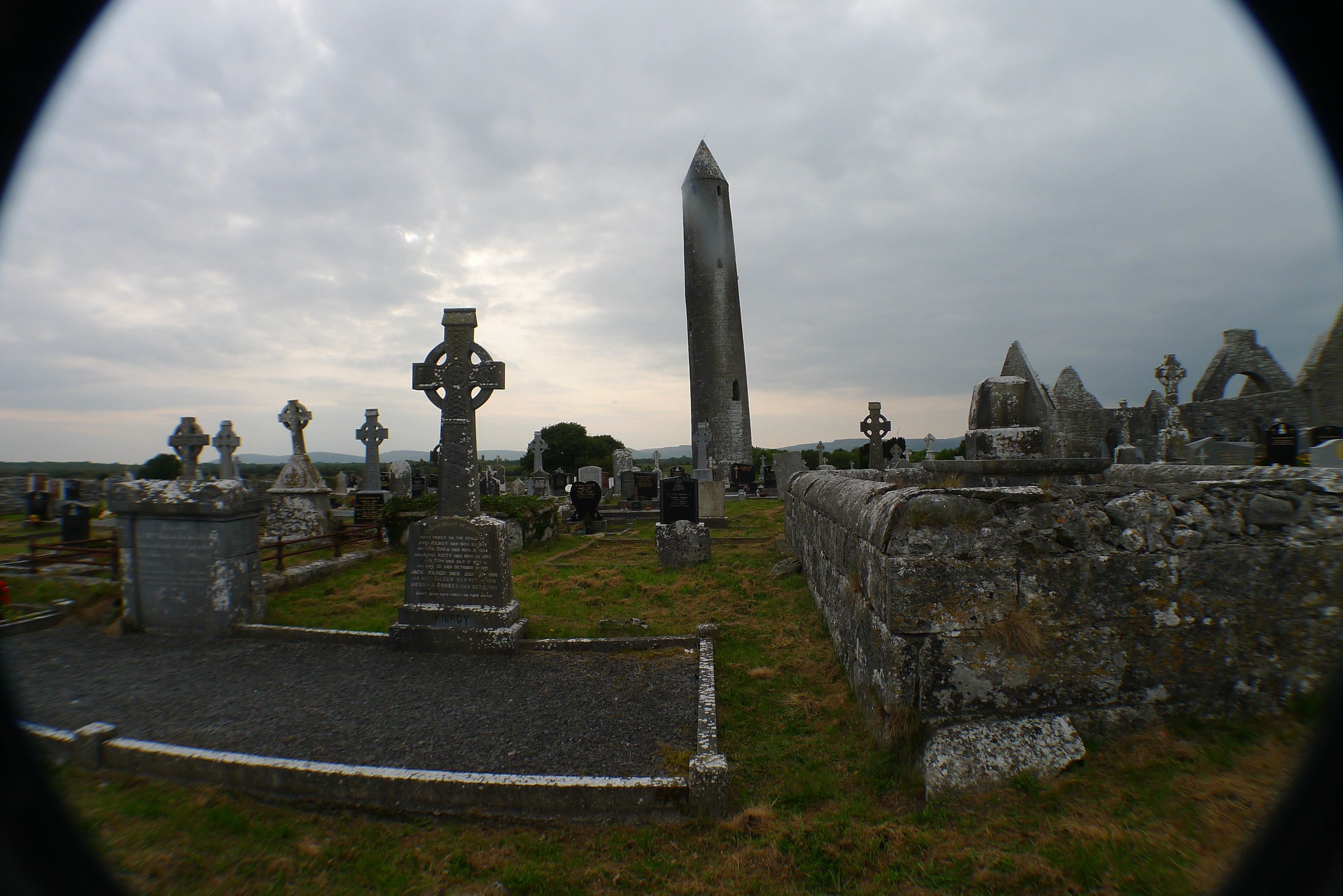
What remains of the Monastery at Kilmacduagh, home to William John Burke.   Photo by Larry O'Neill

What remains of the Monastery at Kilmacduagh, home to William John Burke.
Photo by Larry O’Neill

Young William John Burke spent two years at St. Jarlath’s of Tuam, in preparation for entering St. Patrick’s Seminary at Maynooth. A diligent student he was readily accepted to the institution and began his studies in 1825. Below is his matriculation, or qualifying exam record. The entry contains the following information:

Name: William Burke
Diocese: Kilmacduagh
Entered Maynooth: 25.8.1825
 Ordained: 1828 (Subdeacon) & 1830 (Priest).
Reproduced by kind permission of The Russell Library NUIM

Reproduced by kind permission of The Russell Library NUIM

Special thanks:
Larry O’Neill (photography)
Audrey Kinch, Library Assistant at Special Collections: Russell Library & JPII Library. St Patrick’s College, Maynooth
Sources
Yorkshire Gazette 02 June 1855


School

IMG_0052William John Burke was educated locally for his first years of schooling and may have attended a “Hedge” school, common at the time. When he was a bit older his father hired a private tutor probably to prepare him for his second level education.

At the time the best and maybe the only school in the West of Ireland that was focused on training young boys for the priesthood was newly founded St Jarlath’s of Tuam. The school opened in 1800 provided a good basis for young boys who would later enter the seminary. William John Burke was accepted to study there where he remained until he entered St. Patrick’s of Maynooth in 1825.

Sources
The Reporter, June 20 1868. P8
Ní Dheirg, Íosold. Emily M. Weddall: Bunaitheoir Scoil Acla. Baile Atha Cliath: Coisceim, 1995.
http://www.jarlaths.ie/history/jarlaths-history/

William John Burke: Early life

William John Burke grew up in the Kinvara area of Co. Galway. He seemed to enjoy a relatively happy and comfortable childhood. His father, John owned quite a bit of land in the Kinvara area, affording William John and his sibling a few extra luxuries denied so many at the time.

Kinvara Bay, where William John Burke lived as a child

Kinvara Bay, where William John Burke lived as a child

The Burke family were popular in their community. John Burke contributed to local causes, including that of the building of St. Colman’s Church outside Kinvara. According to William John, in a lecture he gave many years later in theirs was an open house, welcoming people from all communities.

William John was the second son of John Burke and his wife. His father was a devout Catholic, whose faith he would give his life for, adhered  to the tradition of encouraging one of his sons to become a priest. In those days it was usually the second son as the first (Patrick) inherited the land. William John as the second son was earmarked for the priesthood, this vocation was  instilled in his from childhood, as he would tell in his lectures decades later. As preparation for the priesthood began as a child, education was an important factor. At the age of about 12 young William John would have left home to attend St. Jarlath’s School in Tuam, the first step on his journey to becoming a priest.


Sources
The Reporter, June 20 1868. P8
Sheffield Independent 10 December 1870. p 12
http://www.jarlaths.ie/history/jarlaths-history/