Category Archives: Places

Darrell Figgis on Achill

Darrell Figgis made Achill his western writing retreat. In 1913 he purchased land and had a cottage built on the Island. If he moved to Achill to live a quiet life away from the distractions of Dublin that was short lived.  He soon,  probably with the persuasion of people like Emily, Claud Chavasse, An Paorach, Eva O’Flaherty and the the other founding members of Scoil Acla to get involved in the summer school.  In 1914 he took part in a production of Douglas Hyde’s Casadh an tSugain, directed by the artist Paul Henry, who also made Achill his home. The photograph below was of the main players in the production.

Back Row: John Kilcoyne, Dominick Lavelle, James Kilcoyne, Pat McNamara. Front row: John McNamara, Darrrell figgis, Pat McNamara

Back Row: John Kilcoyne, Dominick Lavelle, James Kilcoyne, Pat McNamara.
Front row: John McNamara, Darrrell figgis, Pat McNamara

Thanks
 Edward King and Tommy McNamara, Achill

Darrell Figgis, the Writer

Slide04When Darrell Figgis arrived back in London, after leaving his father’s tea company in India, he had already written poetry. Encouraged by his uncle E J Figgis, he left the tea trade behind and began his literary career. He was published as early as 1909, which quickly led to him being took on as literary adviser to Mess’s. Dent form 1911 to 1913 ,when he left London for Dublin. He was readily accepted on the literary scene. By now he was married to Emily “Millie” Tate and had began building a house on Achill, which he would use as a retreat to write. But his writing career would be somewhat interrupted when he got involved in politics, which would occupy most of his life for the next decade. He still found time to write and produced many works in those years. In his obituary in The Times (London) interestingly enough his literary career was highly praised and given more attention than his political life.

Writing credits Slide73


Sources
Death Of Darrell Figgis.; The Times (London, England), Wednesday, Oct 28, 1925; pg. 16
Thanks to; Edward King

The Early Life of Darrell Figgis

Darell Edmund Figgis was born on 17th September 1882 in Rathmines, Dublin to Arthur William Figgis and his wife Mary. The family lived between Ireland and India where his father was a tea broker with the East India Company, in Calcutta, West Bengal.
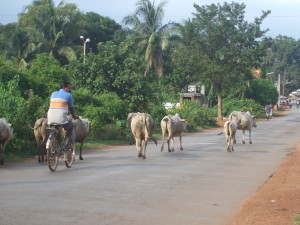
West Bengal, where Darrell Figgis spent his childhood

West Bengal, where Darrell Figgis spent his childhood

When Figgis was about ten he was sent to England to be educated. He attended the Company of Grocers School in Hackney, where the merchant class sent their children. The school had the reputation of being one of the best second level educational institution in London at the time. The headmaster at the time Darrell Figgis was a pupil, maintained strict discipline, but had modern ideas on teaching. These early influences may have laid down a firm foundation for his writing career.

The first Head Master, Herbert Courthope Bowen (1847–1899) was committed to  innovative ideas about English teaching, pupils’ learning and children’s development that are usually associated with progressive teaching in elementary schools.

He did not begin his literary career straight after finishing his education.  He joined his father in tea industry, but that was not long lived. Figgis would recount to his fellow inmates, years later during his interment in Durham Jail, to hi that he had a talent for tea tasting. As Kevin O’Shiel disclosed in his Witness Statement:

He [Figgis] was the acknowledged king of all tea-tasters, being gifted with a palate of such exquisite refinement and unerring accuracy that his judgements on the tea samples submitted to the the tasters became celebrated…

His job as a tea broker in his father’s company came to an abrupt end when he fell out with him;

“He was a very obstinate disposition,self-willed, and reluctant to fall in with is father’s ideas as regards the carrying on of their business with a result that he parted form his father and returned to London, working his passage home…”

On his return his stayed with his uncle, who helped to nurture his writing.


Sources
India Births and Baptisms, 1786-1947,” database, FamilySearch
http://www.independent.co.uk/news/a-school-that-fell-from-greatness-1593501.html
http://search.findmypast.ie/record?id=gbor%2fschool%2fad%2f10237120&highlights=%22%22
https://remakingenglish.wordpress.com/
http://www.bureauofmilitaryhistory.ie/reels/bmh/BMH.WS1770%20Section%205.pdf#page=100
Public Record Office. CO 904/201/Part 134-153
Annagh

Annagh

There is no peace now however thing to,
No peace where the ways of men ring loud,
save in a secret place that I know,
Hidden as in a cloud.

All the high hills stand clustering round,
Arched to protect it from trouble and noise,
the great sting hills that sing without sound,
And speak with no voice.

There lies Caorog, the mute low lake
And Bun-na-freamha lying aloft,
Peacefully sleeping, or even if they wake,
Lapping low and soft.

Upon the high hill-tops the heather may be crying.
And over the hill-tops the voices of men are heard,
But here only water lapping and sighing,
Or the wail of a bird.

Peace, peace and peace from the inner heart of dream,
More full of wisdom than speech can tell,
Drop like a veil round the show of things that seem
With an invisible spell.

Darrell Figgis

DSCF2416

Darrell Figgis arrives on Achill

Darrell Figgis first visited Achill in 1912. After acquiring land from the Mission Estate in 1913 he and his wife Millie, built a cottage and made the island his writing retreat. He was already a published writer having made a name for himself in artistic circles in both Dublin and London.

At the time of his arrival there was a group of people central to the cultural life of the island. These people were Francis Power (An Paroach), Claud Chavasse, Eva O’Flaherty, Anita McMahon, Paul Henry and Emily, the founding members of Scoil Acla. Figgis naturally gravitated towards the group and can be credited with the part he played in formation of the summer school.

At the time the political situation was heating up and some of the Scoil Acla members were getting involved. Emily, Anita McMahon and Eva O’Flaherty, were all members of the newly formed Cumann na mBan (The Irishwomen’s Council). Claud Chavasse was heavily involved in Nationalist circles as were the students that attended Scoil Acla such as Margot and Cesca Trench and Diarmuid Coffey. Figgis was naturally drawn in too.

November 1913 saw the formation The Irish Volunteers, which Figgis joined and was appointed to drill the Achill Battalion. He used to drill them on the beach and is still talked about to this day. Local ledgend tells of him spending a lot of time in Annagh (a remote area on the west coast of Achill), where he drew inspiration from particularly for his poetry but, it was also an ideal place to hide arms.

Scoil Acla 1913

Scoil Acla 1913

Thanks to:
John Twin McNamara, Achill historian
Edward King, Achill
Sources
http://scoilacla.ie/history/founding-members/darrell-edmund-figgis/
www.militaryarchives.ie/collections/…the…/cumannnamban-series
Chenevix Trench, Frances Georgiana, and Hilary Pyle. Cesca’s Diary, 1913-1916: Where Art and Nationalism Meet. Dublin: Woodfield Press, 2005.