Category Archives: Places

United

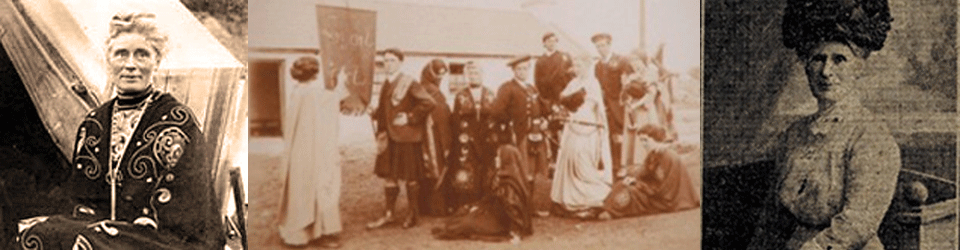
When Anita McMahon arrived on Achill in 1912 to learn Irish she could not have imagined that the Island would become her home for most of her life. Fate stepped in and put her in the way of the people and events that would shape her life from there on in.

Emily Weddall was one of those people,Eva O’Flaherty was another, Darrell Figgis, Paul Henry and Claud Chavasse would have their influence on her too. No only did she make friends with this group of people she also collaborated on many things with her Achill cohorts.

Shortly after Anita arrived on Achill in late 1912 early 1913 the Achill Land Wars were in full swing. Again she put her journalistic skills into practice, reporting on the event and writing letters to the Mayo News supporting those affected by the agitation.  Emily, herself was a Protestant tenant of the Achill Mission Estate, the one at the centre of the controversy.

This event in history was recorded for the National Folklore Commission; The Schools’ Collection in 1937/38. The informant was by Pádhraic Mac Pháidín, the headmaster of Tonatavally, on Achill. 

St Thomas' Church on the Achill Mission Estate

St Thomas’ Church on the Achill Mission Estate

About 30 years ago the C. D. B. [Congested District Board] was buying up the estates in the poorest part of the West. The people wanted the “Achill Mission” to sell and they refused. An agitation was commenced and eventually they agreed but wanted to retain the lands of the Colony and other Protestant Settlements in the Island. the Protestants became infuriated at this juggling and the Catholics promised them support moral and material. This was in 1912. the leaders were Rev. Fr. Colleran, Darrell Figgis and William Egan, a Protestant gentleman of Slievemore.To these must be added the name of Walter Bourke another Protestant, who by verse and organising ability gave impetus to the movement…

…A system of boycotting was adopted, and Grierson was compelled to get two “Emergency men” from outside. A mass meeting was convened and the people marched in a body to the Rent office and demanded that the land should be sold…

Master Mac Pháidín remembers that the Agitation went on for the entire winter of 1912/13, but was resolved eventually in the Spring. With the perseverance of the locals and under the guidance of   Fr. Colleran the Land Wars ended quietly, the people of Achill the victors.

Mr Scott sold out immediately at the commencement of the agitation and Mr Pike did likewise a short time afterward. the Achill Mission and Mrs McDonnell did so at last.

The remarkable thing about the whole saga was it disproved the popular opinion that Catholics and Protestants were on opposite sides. In a letter to the Mayo News Anita tells of how the people of Achill from different backgrounds and religion united to sort out the situation for the good of all.

In conclusion it is pleasant to be able to state that Achill offers an emphatic denial of the much talked of division between Protestants and Catholics in Ireland. In Achill, if anywhere for reasons too long to explain here we might expect to find sectarian feeling very strong. Yet today, in striking vindication the Irish Protestant from the Irish Catholic we find the Protestant Dugort  tennants united with their Catholic neighbours, and as anxious as they are to free Achill Island from the blighting influence of the Achill Mission trusteeship…


The Schools’ Collection, Volume 0086, Page 318 Tonatanvally, Co. Mayo

The Mayo News, April 12 1913

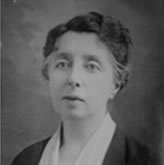
Anna Agnes Mary McMahon

Anna Agnes Mary McMahon was born on 16 May 1871 in Cork city and christened in St Finbar’s Church. Anna Agnes appeared on her birth certificate and baptisimal record, but was known to family and friends as Antia.

Her father Thomas John McMahon was the manager of the National Bank on the South Mall in the city. Little is known about her early life, given her father’s profession she must have enjoyed a relatively comfortable existence. She qualified as a journalist and may have studied in University College Cork, or Queen’s College as it was known at the time. There was a degree course in journalism there in the early 1900’s, which she may have attended. She worked on Fleet St., London for some time.

Some time in the beginning of the 1900’s like Emily Anita began mixing in Gaelic League circles, which in turn inspired her to sign up for Irish language classes run by Scoil Acla. The summer school and/or the people she met there had a profound influence on Antia’s life. She more or less made Achill her home for life.DSCF1639


Sources
“Ireland Births and Baptisms, 1620-1881,” index, <i>FamilySearch</i> (https://familysearch.org/pal:/MM9.1.1/FPVR-88K : accessed 15 Sep 2014), Anna Agnes Mary Mc Mahon, 16 May 1871; citing Cork, Ireland, reference v 10 p 202; FHL microfilm 255824.
http://dit.ie/icr/media/diticr/documents/French%20ICR%2010.pdf
http://scoilacla.ie/history/founding-members/anita-mcmahon/


Anita Arrives on Achill

Anita McMahon, a Cork native arrived for the 1912 Scoil Acla to learn Irish. She had intended to leave after the summer but like many before her, ended up staying for most of her life. From her arrival her destiny on Achill seemed to have been set.

On her way to Irish class one morning an event was unfolding outside her lodgings of the Amethyst Hotel in Keel.  On a platform was the Protestant Agent collecting the rents from a group of men. Curiosity caused her to stop and listen to the ‘commotion’, which turned out to be the agent extracting rather than collecting rent from the men. Appalled at how the agent was treating the men “just like dogs”, as she later wrote, Anita felt compelled to do something about the plight of these men.  Instead of going to her Irish class she returned to the hotel and questioned the proprietor about the what she had just witnessed.

At the time the Amethyst Hotel was owned by a Mr. Patton who was able to give he a little background on what was going on outside. He told her that the rent at the time (1912) was about £1 a year which sounds like very little but was a extraordinary amount then, even by today’s standards. These high rates often resulted in tenants not being able to pay and subsequent eviction.

Anita was qualified journalist and wasted not time in putting pen to paper, writing to the local newspaper The Mayo News requesting a column in the paper. She received  a very courteous reply from the manager, telling her she could have “as much space as she wished”, but he could not pay her.  She did not wish for payment, only space. So she got down to work to “expose the scandal”. Her work was not in vain her actions gained such momentum, that the following week the Mayo News had blaring headlines on ‘The Achill Scandal’. This was continued the following week, and so on, pouring further light on the conditions under which the Achill people existed.

anita_mcmahon

Anita

Emily backed her on her endeavor and the two women became lifelong friends and allies…

Sources
http://www.presentation-sisters.ie/content/view/83/107
ehttp://scoilacla.ie/history/founding-members/anita-mcmahon/


Enid Settles in Ireland

Emily Weddall enrolled her niece Enid or now Siobhan Betts in Alexandria College, Dublin. Emily attended its sister school for Daughter’s of the Irish Clergy in the 1870’s and 80’s. Emily good friend Kathleen Lynn attended Alexandria College too, making it an idea choice to send fifteen year old Enid after she arrived in Ireland.

During the school holidays she returned to Achill to spend the summer with her aunt Emily on the Island. The summer of 1913 was a pivotal to the cultural life on the Island and to Emily and Enid alike, a far cry from her experience of life in Australia.

Advertisement for Scoil Acla 1913

Advertisement for Scoil Acla 1913

That summer saw the final Scoil Acla until it’s revival in 1985, when the war and the political situation prevented it from continuing. This particular year the Trench girls from Dublin attended Scoil Acla which was documented by Frances, or Cessca in her diaries. Both Emily and Enid or Siobhan as she was known in Gaelic circles featured as some of the main protagonists.

The summer began with the Oireachtas or Ardfheis in Galway and ended with the Scoil Acla summer school in August. Siobhan Betts met up with people who would influence her future and remain friends with for life.

Sources
Chenevix Trench, Frances Georgiana, and Hilary Pyle. Cesca’s Diary, 1913-1916: Where Art and Nationalism Meet. Dublin: Woodfield Press, 2005. Ní Dheirg, Íosold.
Emily M. Weddall: Bunaitheoir Scoil Acla. Baile Atha Cliath: Coisceim, 1995.

Emily meets Enid

Enid Cecily Patricia Betts was only 14 years old when she disembarked in London off the Themistocles, in January 1913. It is not clear if Emily met her there before she crossed the sea again to Ireland. Arriving on Achill must have been a great surprise to young Enid. It was to be a life changing experience for her in many different ways. No doubt Emily was a kind and loving aunt, but she conducted her life in a different way to her sister Miriam, Enid’s mother. Little of her previous life in Australia could have prepared Enid for her new life with her Aunt.

London

London

When Enid first arrived Emily enrolled her in Alexandria College. Emily had attended the School for Irish Clergy Daughters, which was connected to the college. She stayed with friend’s of Emily’s in Dublin and was introduced to the cultural scene of the time, and Gaelic League and it’s members. Her name was changed to the more Gaelic, Siobhan, probably instigated by her aunt Emily. Emily had changed to hers to Eimhir ni Uadall a few years earlier.

Sources
Class: BT26; Piece: 561; Item: 67. Ancestry.com. UK, Incoming Passenger Lists, 1878-1960 [database on-line]. Provo, UT, USA: Ancestry.com Operations Inc, 2008
Ní Dheirg, Íosold. Emily M. Weddall: Bunaitheoir Scoil Acla. Baile Atha Cliath: Coisceim, 1995.